Place Value and Face Value in Maths: Chart, Meaning, and Examples
A place value chart shows the value of each digit in a number based on its position. In mathematics, place value means how much a digit is worth depending on where it sits in a number, while face value is simply the digit itself. In Hindi, place value is called Sthaniya Man (स्थानीय मान) and face value is called Ankit Man (अंकित मान) or Jatiya Man (जातीय मान). Understanding both helps you read large numbers, write numbers in words, and solve addition or subtraction easily.
Videos on this topic
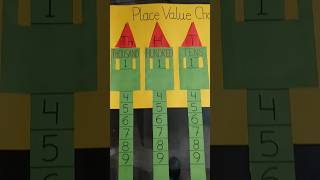 Place Value Chart: Easy Guide for Class 2 to 5
 Face Value Meaning in Hindi: Place Value Kaise Nikale
 Face Value and Place Value | What is face value in Maths | Face Value | Place Value | Class 2 Maths
 ॥स्थानीय मान (place value) क्या होता है?॥ #shorts #maths #youtube #youtubeshorts #education
 Place Value and Face Value with Easy Examples
 स्थानीय मान कैसे निकालें?।। sthaniya man kaise nikalen?।। स्थानीय मान।।place value।।
 Place Value Project: Easy TLM Working Model
 Place value slider⭐✨# Maths project📏📖
Difference Between Place Value and Face Value
Face value is the actual digit itself. It never changes, no matter where the digit appears in a number. For example, the face value of 5 in 52 and in 589 is always 5. Place value changes with the position of the digit. In the number 52, the digit 5 is in the tens place, so its place value is 50. In 589, the digit 5 is in the hundreds place, so its place value is 500.
- Face Value (अंकित मान) = The digit itself
- Place Value (स्थानीय मान) = Face Value multiplied by Position Value
- The place value and face value of 0 are always 0 in any position.
Indian Place Value Chart
In Indian school maths, we group numbers into periods: Ones, Thousands, Lakhs, and Crores. We read numbers from left to right, but we find the place value of digits starting from the rightmost digit (ones place).
| Period | Place Name | Place in Hindi | Value in Numbers |
|---|---|---|---|
| Ones | Ones (Units) | इकाई (Ikai) | 1 |
| Ones | Tens | दहाई (Dahai) | 10 |
| Ones | Hundreds | सैकड़ा (Saikda) | 100 |
| Thousands | Thousands | हजार (Hazaar) | 1,000 |
| Thousands | Ten Thousands | दस हजार (Dus Hazaar) | 10,000 |
| Lakhs | Lakhs | लाख (Lakh) | 1,00,000 |
| Lakhs | Ten Lakhs | दस लाख (Dus Lakh) | 10,00,000 |
| Crores | Crores | करोड़ (Crore) | 1,00,00,000 |
| Crores | Ten Crores | दस करोड़ (Dus Crore) | 10,00,00,000 |
Formula to Find Place Value (स्थानीय मान निकालने का सूत्र)
The rule to calculate place value is very simple: Place Value = Face Value × Place Value of that position. For example, let us find the place value of each digit in the number 4,738: Digit 8 is in Ones place: 8 × 1 = 8 Digit 3 is in Tens place: 3 × 10 = 30 Digit 7 is in Hundreds place: 7 × 100 = 700 Digit 4 is in Thousands place: 4 × 1,000 = 4,000 When you add all these place values together (4000 + 700 + 30 + 8), you get 4,738. This is called the expanded form of the number.
Worked Examples of Place Value and Face Value
Here is a list of worked examples showing the underlined or target digit in different numbers.
| Number | Digit | Place Name | Face Value |
|---|---|---|---|
| 25 | 5 | Ones | 5 |
| 25 | 2 | Tens | 2 |
| 348 | 4 | Tens | 4 |
| 348 | 3 | Hundreds | 3 |
| 1,506 | 0 | Tens | 0 |
| 1,506 | 5 | Hundreds | 5 |
| 7,892 | 7 | Thousands | 7 |
| 9,415 | 1 | Tens | 1 |
| 43,210 | 4 | Ten Thousands | 4 |
| 6,05,321 | 6 | Lakhs | 6 |
| 82,45,619 | 8 | Ten Lakhs | 8 |
| 5,12,34,567 | 5 | Crores | 5 |
Common Mistakes to Avoid
Students often make small errors when writing place values in tests or homework. Keep these points in mind to stay accurate.
- Confusing Place and Place Value: 'Place' is the name of the position like Hundreds or Tens. 'Place Value' is the numerical amount like 300 or 40.
- Writing extra zeros for zero: The place value of 0 in the tens place is just 0, not 00.
- Counting from left to right: Always start counting positions (ones, tens, hundreds) from the right side of the number.
- Confusing face value with place value: The face value of 7 in 7,000 is 7, not 7,000.
Common questions
- What is place value in Hindi?
- Place value is called Sthaniya Man (स्थानीय मान) in Hindi. It is the value a digit holds according to its position like ikai, dahai, or saikda.
- What is face value in Hindi?
- Face value is called Ankit Man (अंकित मान) or Jatiya Man (जातीय मान) in Hindi. It is simply the digit itself, which never changes.
- What is the place value of 0 in any number?
- The place value of 0 is always 0, whether it is in the ones, tens, hundreds, or thousands place.
- What is a place value slider?
- A place value slider is a simple paper or cardboard learning model used in school projects. Students slide number strips through cut-out windows to understand how moving digits across ones, tens, and hundreds changes their value.
- In which place do the place value and face value stay the same?
- For any digit in the ones (units) place, its place value and face value are exactly the same because multiplying by 1 leaves the digit unchanged.