Herbs, Shrubs, Trees, Climbers and Creepers: Types of Plants with Examples
Plants around us are grouped into five main types based on their size, stem strength, and life span: herbs, shrubs, trees, climbers, and creepers. Herbs are small plants with soft green stems, shrubs are medium-sized bushy plants with thin woody stems, and trees are tall, strong plants with thick wooden trunks. Climbers and creepers have weak stems that cannot stand upright on their own. Knowing these groups helps students easily identify plants in their science and EVS lessons.
Videos on this topic
 Shrubs Examples, Herbs and Trees: Learn Plant Types
 Herbs Drawing Easy: Types of Plants for Kids
 types of plants |herbs,shurbs,trees,creepers,climber#evscentralschool#plants#youtubeshorts#shorts
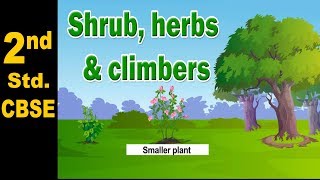 Shrub, herbs and climbers | 2nd Std | Science | CBSE Board | Home Revise
 #shrubs ##shrubs name #shrubs plants #science #english #types of plants
 Types of Plants PART 1 / HERBS /Types of Plants for Kids | Plants around us/
 🌿 Discover the 5 Major Types of Plants | Educational Video #viral
 ||Types of plants in hindi||पौधे के प्रकार ||Different types of plant||Hubs ,Shrubs, Creeper,Climber
Definitions and Features of the Five Types of Plants
Every plant has a specific type of stem and growth pattern. Here is how scientists and school textbooks classify them.
- Herbs: Very small plants, usually less than 1 metre tall. They have soft, tender, green stems without wood. Most live for only one or two seasons.
- Shrubs: Medium-sized plants, taller than herbs but shorter than trees. They have hard, thin, woody stems branching out close to the base of the ground, giving them a bushy look.
- Trees: Tall and large plants with a single, hard, thick brown woody stem called a trunk. They have many branches high above the ground and live for many years.
- Climbers: Plants with very thin, weak stems that take support from walls, sticks, or other trees to climb upward.
- Creepers: Plants with weak, soft stems that cannot stand upright and spread horizontally along the ground.
10 Examples of Herbs, Shrubs, and Trees
Here is a complete list of 10 common examples for each plant category to help with homework, charts, and science project sheets.
| Herbs | Shrubs | Trees |
|---|---|---|
| Mint (Pudina) | Rose | Mango tree |
| Coriander (Dhaniya) | Tulsi (Holy Basil) | Neem tree |
| Spinach (Palak) | Hibiscus (China Rose) | Banyan tree |
| Wheat | Lemon plant | Peepal tree |
| Paddy (Rice) | Jasmine (Chameli) | Coconut tree |
| Grass | Cotton plant | Teak tree |
| Tomato | Bougainvillea | Gulmohar tree |
| Mustard (Sarson) | Henna (Mehendi) | Apple tree |
| Fenugreek (Methi) | Tea plant | Pine tree |
| Ginger | Pomegranate (Anaar) | Ashoka tree |
Examples of Climbers and Creepers
Climbers and creepers are special plants with weak stems. Here are the most common examples from daily life and gardens.
- Climber Examples: Money plant, Pea plant, Grapevine, Bitter gourd (Karela), Bottle gourd (Lauki), and Morning glory.
- Creeper Examples: Watermelon, Pumpkin, Muskmelon (Kharbuja), Strawberry, and Sweet potato.
Key Differences: Herbs vs Shrubs vs Trees
This table shows the main points of difference between herbs, shrubs, and trees based on NCERT science guidelines.
| Feature | Herbs | Shrubs | Trees |
|---|---|---|---|
| Size | Small (under 1 metre) | Medium (1 to 3 metres) | Large and tall (above 3 metres) |
| Stem Type | Soft, tender, and green | Hard and thin woody stem | Thick, hard, brown wooden trunk |
| Branching | Few or no branches | Branches start near ground level | Branches grow high up on trunk |
| Life Span | Short (few months or 1 year) | Medium (several years) | Long (many years to decades) |
| Hindi Name | Shaak (शाक / जड़ी-बूटी) | Jhaadi (झाड़ी) | Vriksh / Ped (वृक्ष / पेड़) |
Easy Tips for Drawing Plants for School Charts
When drawing herbs, shrubs, trees, climbers, and creepers for school assignments, focus on the stem style to make each drawing accurate.
- Herbs: Draw small green stems with small leaves and roots. Show no brown wood.
- Shrubs: Draw multiple brown stems starting directly from the soil line, forming a round bushy shape with flowers.
- Trees: Draw a thick brown trunk that splits into branches only near the top, with a large crown of leaves.
- Climbers: Draw a wooden stick or thread with thin green tendrils coiled around it and leaves climbing up.
- Creepers: Draw a horizontal stem lying flat across the ground with heavy fruits like watermelon resting on the soil.
Common questions
- Is a banana plant a herb or a tree?
- A banana plant is a giant herb. Even though it grows very tall, its main stem is made of rolled-up leaf bases and has no hard wood or bark.
- What are herbs, shrubs, and trees called in Hindi?
- In Hindi, herbs are called Shaak (शाक) or Jadi-buti (जड़ी-बूटी), shrubs are called Jhaadi (झाड़ी), and trees are called Vriksh (वृक्ष) or Ped (पेड़).
- What is the difference between a climber and a creeper?
- A climber uses support like a wall or stick to grow upwards. A creeper spreads out horizontally on the ground because its fruits are usually too heavy to hang.
- Why is tulsi considered a herb or small shrub?
- Tulsi has a slightly woody lower stem when fully grown, but in primary school science, it is usually grouped under herbs due to its small size and soft branches.
- Which part of a tree is called the trunk?
- The single, thick, hard, and brown woody stem of a tree that supports the upper branches is called the trunk.